I think I hate “The Devil Wears Prada 2”
Listen, “The Devil Wears Prada 2” is a good time.
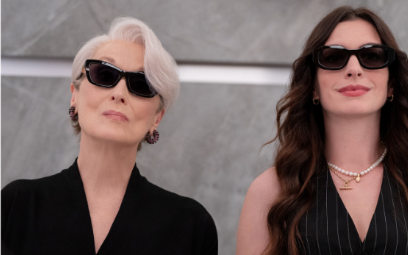
It’s stylish! It’s smart! It’s current, yet imbued with respect for much of what made the original both an instant hit and an enduring classic. It does new things instead of just cashing in on every easy reference (although it definitely cashes in on every easy reference). The score works overtime to spin up nostalgia, and while I do think it would be basically impossible to get Emily Blunt, Stanley Tucci, Anne Hathaway, and Meryl Streep together and make a bad movie, David Frankel et al don’t rest on their laurels: “The Devil Wears Prada 2” is not only a good time, but also a good movie.
That being said, I think I hate it.
It probably sounds like I’m pouting for the same reasons people always do when a piece of particularly beloved intellectual property is exhumed, hooked up to the medical-grade car battery of capitalism, and defibrillated into Dolby Cinema at AMC. And, partly, I am!

The uncanniness of our recent inundation with reboots, remakes, and sequels across all genres has already beenwidelydiscussed, but suffice to say, this shit is out of control. As Shahed Ezaydi wrote, “When I found out there would be another Shrek…16 years after the fourth film, I silently screamed.”
All this wallowing in the past while production companies continue to devaluehuman labor and consolidate into megacorporations can make the future of original movies seem bleak. The future in general, too. When Gen Z is “jealous of millennials,” and the kids are smoking fucking cigarettes, and the government is AI-generating memes about 1800s western expansionism to celebrate ICE violence while also undoing decades of public health progress, and making it harder for everyone other than ciswhitemen to vote, and forcing the country into yet another immoral and illegal war, the timeline gets claustrophobic. It starts to feel like we’re a week away from either “13 Going On 30 In 3D,” or nuclear winter.
Also, for the majority of modern cinema history, I’d say the films most likely to be endlessly reanimated have been horror movies. The alien survives getting tossed out the airlock, someone else puts on the ghostface mask, and it is never safe to go back in the water. Nothing is ever really over, and the threat will always rise again. I don’t think you can just transpose that ominous sense of eternal unfinished business onto other genres without also carrying over some of the eeriness.


And, I just really love “The Devil Wears Prada.” I love it so much that my best friend and I have probably never gotten through a day together without quoting something from deep in the DVD special features at one another. I love it so much that when I wanted to write one of the scariest things I’ve ever written, an essay for Catapult Magazine about the day my mom died and I wasn’t with her because my boss wanted me to wait on hold with customer service, I used the fifteenth anniversary of the film to do it.

My stomach hurt all morning before that piece was published. Once it was live, I stared at the screen for like 10 minutes, refreshing the page again and again just to watch Meryl Streep’s photo load above my byline. I think, or at least hope, that I’ve grown as a writer and a person since then. But I’m also proud of that essay. I needed to write it to start working through my guilt and grief and fury, and I stand by what I wrote. Even if it was erased.
Or, okay, erased isn’t right. When Elizabeth Koch (CEO of Catapult Book Group and daughter of Charles Koch, who is CEO of everything else) decided she was no longer interested in running a magazine, she didn’t erase my essay or the many brilliant others in Catapult’s archives. Koch, also known as the “billionaire who knows what you’re thinking” according to whoever NYThad on the credulity beat in 2023, just did ayahuasca and turned them all into link rot (meaning she changed the URLs so they redirect to the Catapult Publishing homepage, and tucked them into a corner of the site you’d only find if you already knew it was there, or I pointed you directly toward it).
Please understand that I’m not just complaining about this because of my one essay. Catapult was a force. Former editor-in-chief Tajja Isen says it best: The magazine “put writers first,” “encouraged them to experiment,” “published a big name alongside somebody else’s first byline,” and in doing so created the literary world its staff wanted to see. As Isen writes, it was “a beacon, a byline, a resource, a paycheck.”
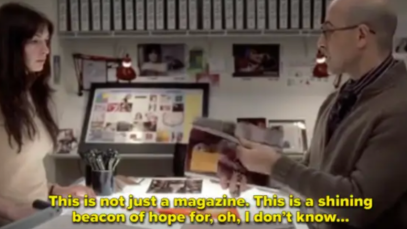
The magazine was important to a lot of people—including, at one point, Elizabeth Koch. And then she changed her mind, and so no matter what all those other people thought, it was over.
A big part of the reason TDWP2 works so well is its clever engagement with the current media landscape. Layoffs, consolidation, and restructures that eliminate entire teams and coverage areas—especially targeting coverage of racial inequality and queer issues—are rampant. And now, corporate decision-makers are pouring resources into “AI innovation” while laying off scores of workers with both actual skills to offer and actual bills to pay.

So when the movie opens with Andy finding out that her entire news team has been fired while she’s in the middle of accepting an award for her work, and then giving a fiery speech about the importance of journalism, it hits! When Emily’s cartoonishly stupid boyfriend is the designated pro-AI mouthpiece, it’s cheeky! When BJ Novak’s character serves to highlight the incompatibility of journalism and the business bro optimization grindset (arguably reprising his role from “The Newsroom,” a reference I’m absolutely the only person interested in making), it’s satisfying! All of that, plus somewhere in there we get Lady Gaga!
But when the finale of TDWP2 finds Andy and Miranda staying Runway’s executionby soliciting the support of a benevolent billionaire, the industry commentary and nostalgic fun kind of curdle.
In a film that comes down on the righteous side of so many timely issues, why do we have to go crawling back to the billionaire? I know the answer is, “Hi, let me introduce you to 20th Century Studios, and also to its owner The Walt Disney Company, and also to real life.” But when we’re indulging in fantasy anyway—and ultimately that’s what a movie where a career journalist buys a luxury NYC apartment is—it’s a noticeable place to draw the line.
As Rodney Benson and Victor Pickard wrote, “relying on the benevolence of billionaire owners isn’t a viable long-term solution to journalism’s crises. In what we call the “oligarchy media model,” it often creates distinct hazards for democracy.”
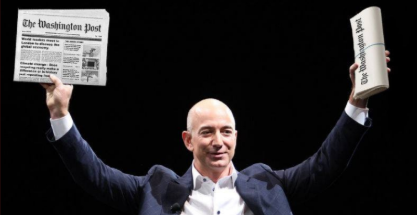
Just look how Jeff Bezos has increasingly flexed his ownership of the Washington Post to gut its teams and redirect its ethos in an explicitly conservative direction. It didn’t happen all at once—for years, his ownership was seen as the saving grace of an historic publication, and the paper seemed to operate with independence. Then, he changed his mind.
Of course, Runway isn’t WaPo. Despite the fact that Andy as a character is defined by her interest in “real journalism,” the story’s priorities for her are elsewhere. We see her in montage, pumping out a series of pieces we’re vaguely told are “important,” but almost nobody reads them or seems to care much about them. We don’t get details. Her peppy assistant suggests writing important stories that are also interesting, which seems like it might be a narrative turning point. But when Andy does lock in on a story that we actually hear about, it’s just a profile of a nice rich lady. And as if no time has passed since she was having secret “Harry Potter” galleys printed in triplicate and hysterically considering calling the national guard for a flight, Andy wants to do it so she can satisfy Miranda.
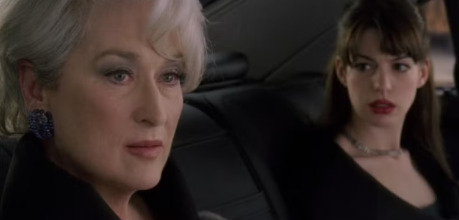
Because despite its engagement with industry issues, TDWP2 isn’t about saving journalism. It’s about saving Miranda. And more than the frustration of seeing one of my favorite movies get an unneeded sequel, or my disdain for billionaires, that’s what has made the ambivalence I felt walking out of the theater crystallize into hatred.
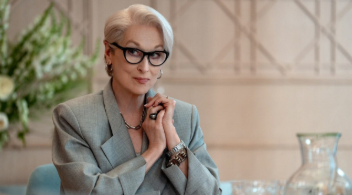
I don’t care what a thousand girlbossified thinkpieces have claimed in the years since 2006 about Andy’s naïveté, or her friends, or her boyfriend. The “real villain” of “The Devil Wears Prada” is stillMiranda Priestly. Her, and the toxic work culture she thrives in.
I know, I’m no fun! I’m a wokescold millennial, or a lazy member of Gen Z who doesn’t want to work, or I have a chip on my shoulder because I know my cover letters to legacy media brands will languish in application portals, unanswered, forever. I hate to see a bad bitch winning.
And yeah, sure, Andy’s friends and boyfriend should’ve been more mature when questioning the abrupt and drastic transformation of her priorities and behavior. A supportive loved one shouldn’t be mad at you because of the unreasonable shit your sadistic boss is demanding. You should both be mad at your boss—in this case, an unpredictable and capricious dictator who keeps her employees in the office all night, relishes assigning impossible tasks, and toys with people’s lives and livelihoods out of malice, and for personal gain, and simply for sport. A lady who totally would’ve had me stay on hold with customer service the day my mom died without a second thought, and probably wouldn’t have even sent flowers to the funeral (which my former boss did—thanks, Elena <3.)
By now you can probably tell that I care about this too much. I swear, I do know that neither “The Devil Wears Prada” nor its sequel are meant to be instructions for real life. But writing has always been a self-mythologizing vocation that teaches people they should accept unfair treatment in exchange for the privilege of participating, and it was further glamorized for a generation by “How to Lose a Guy in 10 Days,” “Sex and the City,” “13 Going On 30,” and so on. In some ways, “The Devil Wears Prada” and its celebration of walking away from an intolerable job were a lone imperfect antidote to this particular flavor of American Dream indoctrination.
The state of journalism is dire. In fact, the entire job market for young professionals feels like it’s imploding across seemingly all sectors. It’s really hard to get hired right now unless you’re applying to be an underpaid caretaker, an underpaid educator, or a handsomely compensated violent goon.
So it feels especially important in this moment to be clear about how an exploitative workplace can look and feel, and what it can cost you. And “The Devil Wears Prada” is one of our only cultural touchstones with mass appeal that comes anywhere close to doing that. Ultimately, it still reinforces the idea that you must endure mistreatment to get ahead when Miranda’s recommendation is what gets Andy hired post-Runway. But still, everyone cheers when Andy leaves Miranda alone in the back seat of the car and throws her phone into that fabulous Parisian fountain.
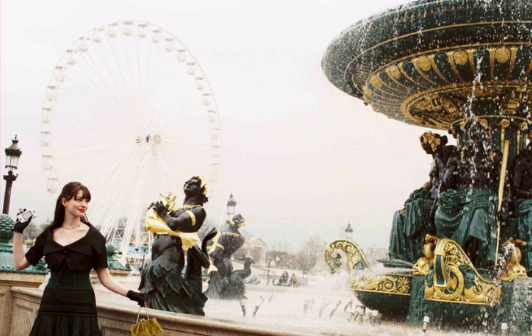
And now, amidst all this chaos, when working conditions and job security in journalism and in general are at a damning low, here comes “The Devil Wears Prada 2.” It takes the story that helped me make sense of how devastatingly the pressure of capitalism had clouded my judgement, and it puts Andy right back in that car, with the boss whose mistreatment she once rejected, so that they can smile at one another and say, I just love work, don’t you?